Ingredient guide
Tranexamic acid
Evidence: Strong
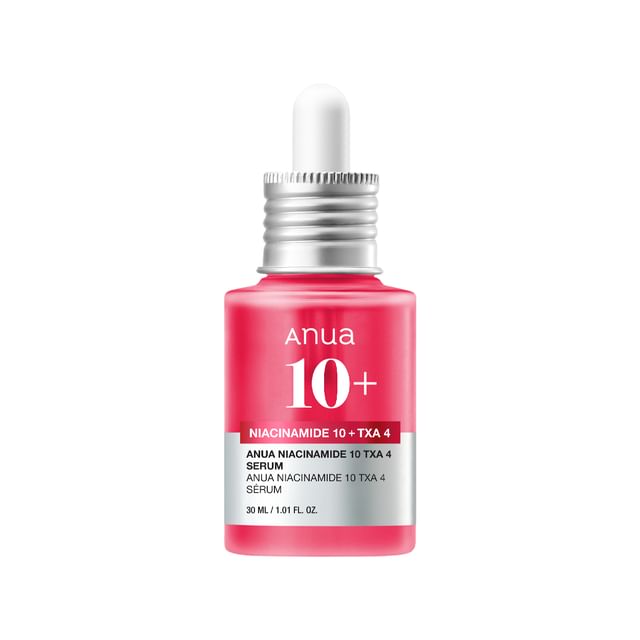
Brightening active with good data on stubborn dark patches and PIH — pairs well with niacinamide.
In depth — how it works, who it's for, how to layer
Tranexamic acid is a synthetic derivative of the amino acid lysine, originally used in medicine to reduce bleeding. In skincare it is valued as a brightener that interrupts the interaction between skin cells and pigment-producing melanocytes, helping to quiet overactive pigmentation.
The evidence is good for a brightener. Oral tranexamic acid has notable clinical support for melasma, and topical formulations at roughly 2 to 5 percent show meaningful, if more modest, improvement in melasma and post-inflammatory dark marks in controlled studies. It is one of the better-supported options for stubborn discoloration that other brighteners have not fully addressed.
It is best for people with melasma, sun- or acne-related dark patches, and post-inflammatory hyperpigmentation, including on deeper skin tones where gentle, non-irritating brighteners are preferable. It maps to dark-spot and dullness concerns.
Layering is easy and productive: tranexamic acid pairs particularly well with niacinamide, vitamin C, alpha-arbutin and daily SPF, forming a strong multi-pathway approach to pigmentation. It is stable and has no notable conflicts, so it fits most routines.
On safety, topical tranexamic acid is generally well tolerated and often fragrance-free, with low irritation. It does not feed Malassezia. Important context: oral tranexamic acid is a prescription medication with clotting-related contraindications and should only be taken under medical supervision, and it is generally avoided in pregnancy and in people with clotting risk. Topical absorption is minimal by comparison, but because of the drug's profile the cautious approach during pregnancy is to confirm topical use with your clinician.